Soulmate Birth Chart: What to Look For in Yours
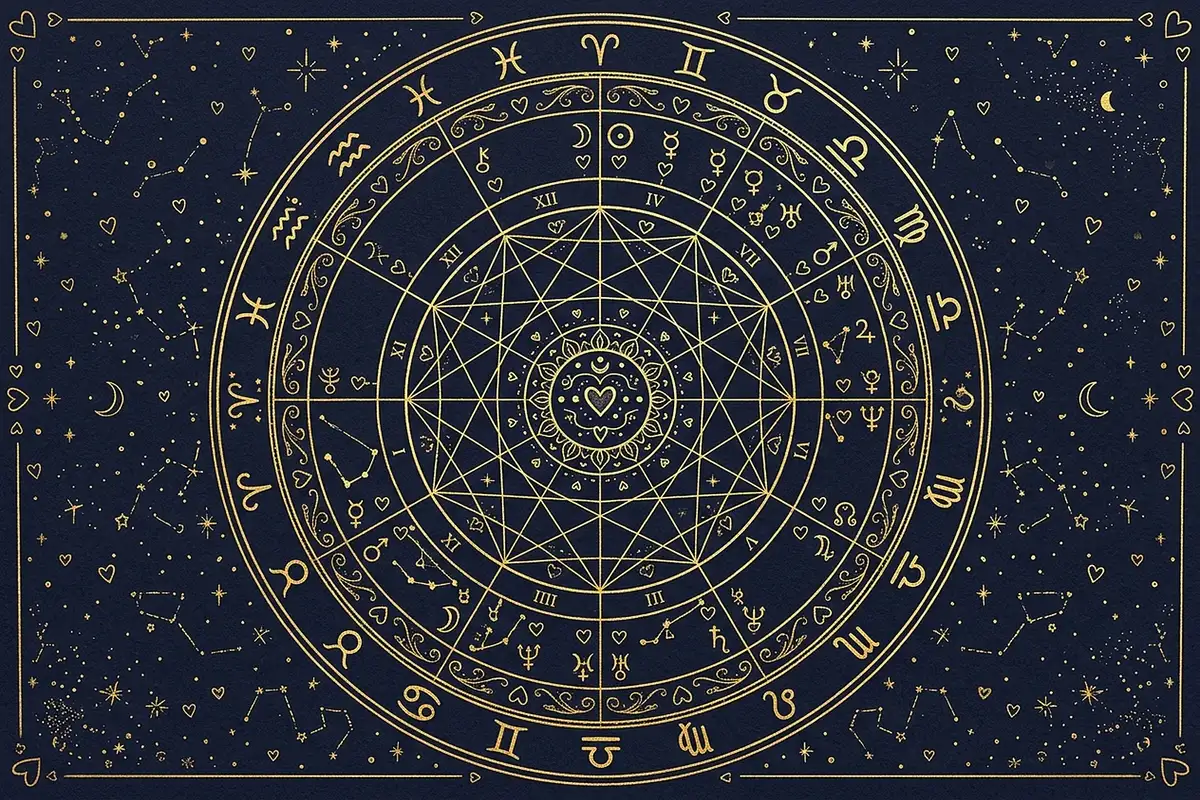
A soulmate birth chart reading focuses on the handful of placements that describe partnership: Venus, the Moon, Mars, the seventh house and the links between them. You do not need to read the whole chart. You need to know where to look and what each piece is saying about the connection you want.
If your chart looks like a spiderweb of symbols, relax. The love-related parts are only a few, and they translate into everyday language very well.
What a birth chart is, in one minute
A birth chart is a map of the sky at the moment you were born. It places the Sun, Moon and planets in signs (the style of each) and in houses (the areas of life they influence). Aspects, the angles between planets, show how pieces work together or push against each other.
For a soulmate reading, we only borrow the partnership parts.
The five pieces that matter for love
1. Venus
Venus rules attraction, affection and what you find beautiful. Your Venus sign shows your style of loving and what draws you in.
2. The Moon
The Moon is your emotional core. It shows what makes you feel safe, and what makes you retreat.
3. Mars
Mars drives chemistry, desire and conflict style. Together with Venus, it tells you whether you chase or wait, tease or declare.
4. The seventh house
This house represents committed partnership. The sign on its cusp describes the traits you look for in a long-term partner.
5. The aspects between them
When Venus and the Moon sit in harmony, wanting and needing line up. When they clash, you may find yourself attracted to people who do not feel safe, or comfortable with people who do not excite you. That tension is one of the most common patterns in love stories.
A simple way to read your chart for love
Follow this order, and write one sentence for each step.
- Venus sign: "I am attracted to…"
- Moon sign: "I feel safe when…"
- Mars sign: "I get excited by…"
- Seventh house sign: "In a long-term partner, I look for…"
- Main aspect among them: "My inner tension is…"
When you finish, you will have five sentences that sum up your love language in your own words. That is a more useful result than any list of "most compatible signs."
Example: reading the five sentences
Suppose someone's chart gives:
- Venus in an air sign: attracted to wit and curiosity.
- Moon in an earth sign: feels safe with routine and reliability.
- Mars in a fire sign: excited by confidence and challenge.
- Seventh house in a water sign: seeks emotional depth in a long-term partner.
- A tense aspect between Venus and the Moon: wants freedom and security at the same time.
Put together: "I want a partner who is clever, dependable, confident and emotionally deep, and I tend to feel torn between freedom and stability." It is a reasonable description of many people, and it is easy to see how it might explain why they keep ending up in relationships that hit only two of the four notes.
From chart to picture
Some people prefer to see what their chart suggests. That is where a portrait quiz comes in. Kismetta soulmate portrait and love reading combines your birth date with questions about the partner you picture, and generates:
- An illustrated portrait of your ideal partner.
- A love reading in plain language.
- Compatibility notes that tie the portrait's traits to astrology.
The portrait is an AI-generated illustration for entertainment. It does not show a real person. Entry access is $1.00, with monthly renewal afterwards at the amount shown at checkout.
If you like the loose, pencil look, read about the soulmate sketch.
Frequent mistakes when reading your chart for love
- Looking only at the sun sign. It matters, but it is one of many.
- Ignoring the Moon. Emotional safety explains a lot of "why did I fall for them?" stories.
- Treating aspects as destiny. A tense aspect is a tendency, not a sentence.
- Searching for a single sign as the answer. Compatibility is layered.
- Forgetting the real person. A chart is a starting point for questions, not a replacement for getting to know someone.
What you cannot get from a chart
- The name, face or location of a specific person.
- A guarantee about the length or success of a relationship.
- Professional advice about health, legal matters or safety.
Use the chart to understand your own patterns. Use time, honesty and conversation to understand another person.
Tips for using what you learn
- Keep your five sentences somewhere visible.
- Before a date, read them once and decide which one matters most for that evening.
- After a few weeks, check which sentences keep proving true.
- If something never fits, drop it. Astrology is a tool, not a rule.
Where to go next
For the planets that carry most of the weight, read our guides to your Venus sign and the seventh house. For an overview of the whole subject, see soulmate astrology. And when you want your own reading and portrait, the quiz is short: add your birth date, answer honestly and see what shows up.
A short checklist before you start
If you plan to read your own chart, gather these first so the exercise goes smoothly.
- Your birth date, time and place. The date alone gives you Sun, Venus, Mars and the Moon in most cases. The time adds houses and the rising sign.
- A reliable chart source. Any standard chart calculator will do. Check that it uses your correct birth city.
- Ten quiet minutes. Love placements are easier to understand when you read them slowly.
- A notes app or paper. Write your five sentences as you go, in your own words, rather than copying the descriptions.
Why this approach beats a generic list
Lists of "most compatible signs" give you the same answer for everyone who shares a sign. A chart reading starts from your own placements, so the sentences you write are only true for you. That is why it feels more convincing, and why it is more useful when you are choosing whom to text back, whom to meet and what to ask for. Keep it playful, check it against real life, and update it as you learn more about yourself.