Soulmate Astrology: Your Chart and Your Match
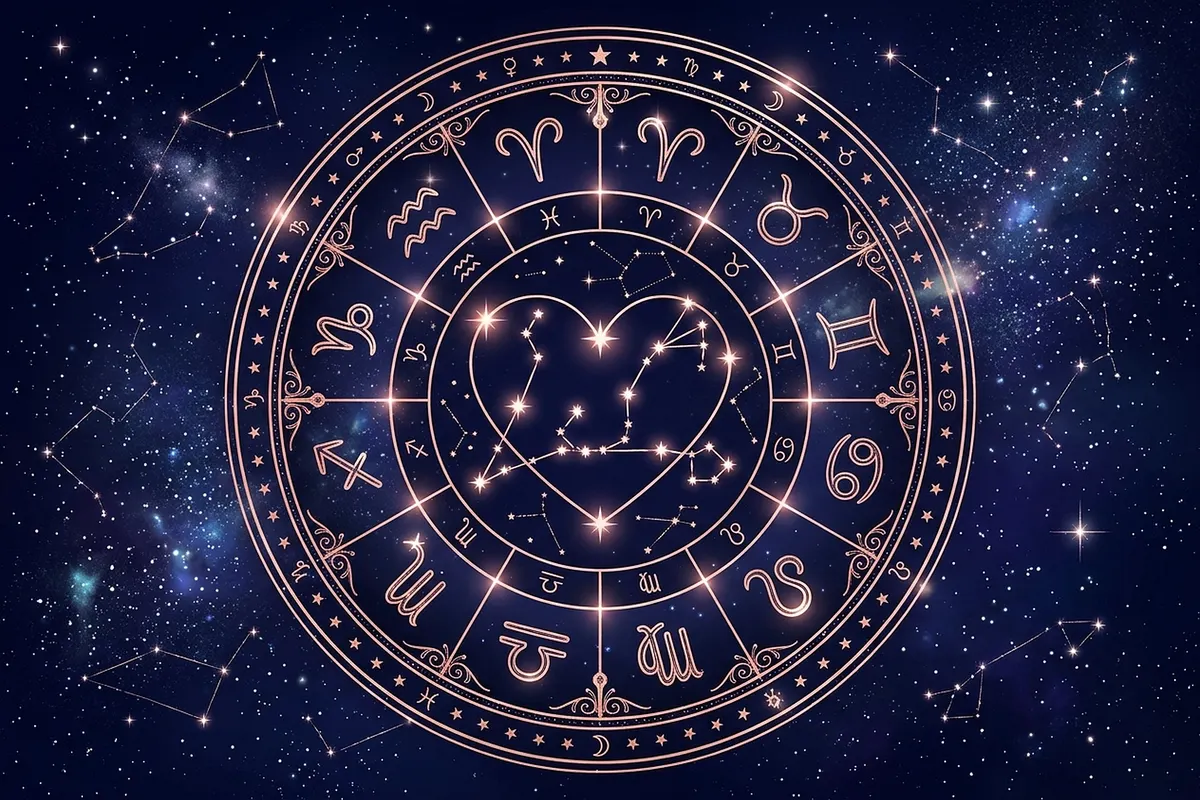
Soulmate astrology uses a few chart placements, mainly Venus, the Moon, Mars and the seventh house, to describe the kind of partner and connection you are drawn to. It does not identify a person. It gives you a vocabulary: why you chase some people and run from others, what makes you feel safe, and what a "good match" would actually feel like in daily life.
That is why it keeps its appeal. A horoscope tells you what the day might bring. Soulmate astrology tells you something about you that you can use for months.
The idea behind it
The word "soulmate" means different things to different people. For some it is a single destined person. For others it is a deep connection that can show up more than once. Astrology works well with the second view, because a birth chart does not point to a stranger. It describes patterns of need and attraction that stay with you through every relationship.
If you read your chart this way, "who is my soulmate" becomes "what does my soulmate-level connection feel like to me?" That is a question you can answer, and it improves the way you date.
The placements that matter most
Venus: how you love and what you find attractive
Venus is the heart of the matter. It rules affection, taste and the way you court someone. Your Venus sign shows what draws you in and how you show care.
- Fire Venus (Aries, Leo, Sagittarius): bold, warm, a little theatrical. You want enthusiasm and chase.
- Earth Venus (Taurus, Virgo, Capricorn): steady, sensual, reliable. You want proof through actions.
- Air Venus (Gemini, Libra, Aquarius): curious, social, verbal. You want conversation and freedom.
- Water Venus (Cancer, Scorpio, Pisces): intense, tender, intuitive. You want depth and loyalty.
For a closer look, read the guide to your Venus sign and soulmate.
The Moon: what makes you feel safe
The Moon is your emotional baseline. People often call a partner "home" when their Moon needs are met: a gentle tone, predictable routines, space to be quiet. If your relationships feel exciting but exhausting, the Moon is often the missing piece.
Mars: chemistry and conflict
Mars shows how you pursue and how you argue. It explains why some people feel electric and others feel flat, and why certain fights keep repeating.
The seventh house: the committed partner
The seventh house is the traditional house of partnership. The sign on its cusp describes the qualities you seek in a long-term partner, which is often different from your sun sign. Learn more in our guide to the seventh house and your soulmate.
Sun sign compatibility is only the start
Many articles stop at "Taurus matches Virgo." It is a fun place to begin, but a sun sign is one placement out of many. Two people with "compatible" suns can still clash if their Moons need different things, and two "clashing" suns can thrive if their Venus signs speak the same language.
A better approach is to compare several layers: Venus with Venus, Moon with Moon, Mars with Mars. You can read more in soulmate compatibility in astrology.
How a quiz turns this into something visual
Reading about placements is useful, but a lot of people want to see it. Kismetta soulmate portrait and love reading combines your birth date with a short set of questions about the partner you picture and the way you love. The result is:
- A portrait of your ideal partner, generated as an illustration.
- A love reading that explains your style in relationships.
- Compatibility notes that connect the traits in the picture with astrology.
The entry price is $1.00. The plan renews monthly afterwards at the amount shown at checkout, so check the terms before you confirm.
It is entertainment, not a verdict. The portrait does not show a real person.
A quick walkthrough of a reading
Imagine a chart with Venus in an earth sign, the Moon in a water sign and a fire sign on the seventh house.
- Venus in earth suggests this person loves through consistency and physical presence.
- A water Moon says they need emotional safety, gentle tone and time to open up.
- A fire seventh house says the long-term partner they seek is energetic, direct and a little adventurous.
Put together, the story is: "I want someone who is exciting, but who also makes me feel calm." That is not a contradiction; it is the exact reason this person may have felt torn in past relationships. Naming it makes the next choice easier.
How to use soulmate astrology without getting stuck
- Write a trait list. Three to five traits from your reading beat any physical description.
- Check it against reality. Which of your past partners had those traits, and which did not?
- Keep one flexible rule. Allow for people who surprise you.
- Do not outsource decisions. A chart can inform a choice; it cannot make it.
What soulmate astrology cannot do
- It cannot name a specific person or say where they live.
- It cannot guarantee a relationship or its length.
- It is not scientific proof and should not replace professional advice for health, safety or serious relationship issues.
Use it as a lens. If it helps you understand yourself better, it has done its job.
Where to go next
If you prefer to start with the chart itself, read the guide to your soulmate birth chart. If you want the visual route, the soulmate drawing guide explains how a portrait is built. When you are ready, the short quiz takes only a few minutes: add your birth date, answer honestly and see what your reading says about the kind of love you are looking for.
Frequently mixed-up ideas
Soulmate vs. twin flame. Soulmate usually means a deep, supportive connection. Twin flame is a more intense, sometimes turbulent idea. Astrology treats both as stories about attraction, not facts, so use whichever helps you reflect.
Karmic aspects. You may read about the Moon's nodes or Saturn contacts being "karmic." They are interpretive traditions about lessons in relationships. Enjoy them, but do not let them keep you in a connection that is not good for you.
Synastry vs. a personal reading. Synastry compares two charts. A personal soulmate reading starts with one, yours, and describes what you seek. Both are valid, and the second is the easier place to begin.