Astrology Compatibility Report for Couples: What's in It
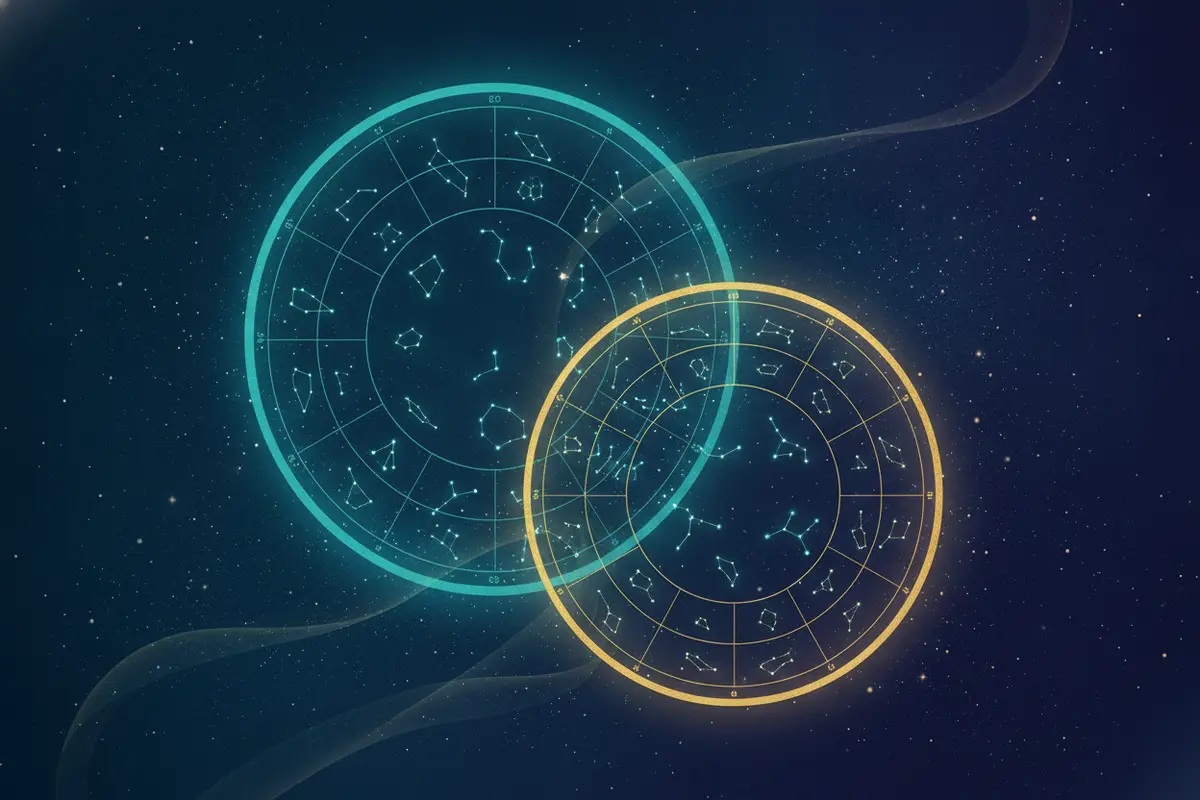
An astrology compatibility report compares two birth charts and tells a couple, in plain language, where they flow, where they clash and what to do about it. The classic version of this is called synastry, and astrologers have used it for centuries. The modern version should read like a conversation with someone who understands both of you, not like a table of degrees.
If you are deciding whether a report is worth your time, here is exactly what a good one covers, what to look for, and how to make the result useful once you have it. Astrology is a tool for reflection and entertainment, and the best reports encourage conversation more than conclusions.
What a compatibility report compares
A thorough report looks at how the planets of one chart relate to those of the other. For couples, the most important links are:
- Moon to Moon. Emotional rhythm. Do you soothe each other or set each other off?
- Venus to Mars. Attraction and chemistry, plus how affection and desire meet.
- Sun to Moon. Whether one person's identity feels supported by the other's emotional style.
- Venus to Venus. Shared values and what each of you finds loving.
- Mercury to Mercury. Communication: do you finish each other's sentences or talk past each other?
- Saturn links. Commitment and seriousness, which can feel stabilizing or heavy.
A decent report gives you each of these in one or two sentences, with a plain label: easy, mixed or challenging.
What it should say about strengths
Look for sections that name the real glue of the relationship. For example:
"You share a water-earth emotional rhythm. She needs reassurance, he needs routine, and you can give each other both. Your Venus signs are in harmony, so you tend to enjoy the same kinds of affection."
This kind of passage gives you something to protect. Couples often take their strengths for granted until they are strained, and having them written down helps you lean on them during a difficult week.
What it should say about friction
An honest report names friction without blame:
"You go quiet when stressed and he wants to talk through it. Neither is wrong. The pattern repeats when you are tired or under pressure."
A good report then offers a way through, such as a signal word, a time limit on silence or a ritual to close an argument. If the report names friction but leaves you with nothing to try, it is only half finished.
What it should leave out
A useful compatibility report avoids:
- Percent scores. "Your match is 83 percent" is entertaining and meaningless.
- Fate language. "You are destined" or "you will never work" claims what astrology cannot.
- Fear. The goal is understanding, not alarm.
- Blame. The report should treat both people's needs as legitimate.
Example: what the sections look like
| Section | What it tells you | What to do with it |
|---|---|---|
| Emotional match | How your moons relate | Plan how you comfort each other |
| Attraction | Venus and Mars link | Keep romance alive in a way both enjoy |
| Communication | Mercury link | Choose the right channel for hard topics |
| Commitment | Saturn and the seventh house | Discuss expectations openly |
| Growth edge | The main challenge | Choose one experiment per month |
Seeing the structure helps you judge any report you consider.
How to prepare for a couples report
- Gather the data. Both birth dates, times and places. If one is missing, say so in advance.
- Decide your question. "Why do we argue about the same thing?" gives better results than "Are we compatible?"
- Agree to read it together. Reading alone and presenting the findings can feel like a verdict.
- Choose a calm moment. Not after a fight.
How to use the report once you have it
- Highlight three strengths and tell each other why they ring true.
- Highlight one friction point and agree on a response.
- Turn the growth edge into a monthly experiment. For example, a weekly twenty-minute check-in.
- Come back after a few months and see what has changed.
The aim is a shared vocabulary. When a couple can say "we are in our water-earth rhythm again" instead of "you are always like this," the conversation becomes kinder.
How Nebulora approaches it
Nebulora starts with a short quiz and your birth details, builds a moon reading for you and a compatibility view with your partner, and writes the result in everyday language. It does not require you to know astrology, and it stays honest about what the tool is: a lens for reflection and entertainment. If you are not sure where to start, the moon sign compatibility guide covers the emotional side in depth, and the zodiac compatibility test guide explains how a quick quiz fits in.
When a report is most useful
At the start of a relationship, to understand each other without waiting for trouble.
During a rough patch, to see whether the difficulty is temperament or timing. If that is where you are, is my relationship over, according to astrology takes a closer look.
Before a big step, like moving in or getting engaged, as a prompt to discuss expectations.
As a gift or a game, because couples often enjoy comparing their results and seeing which parts they agree with.
The takeaway
A compatibility report is worth having if it is specific, balanced and practical. It will not make your decisions, but it can give you the words for conversations you have been avoiding and the confidence that your differences have names. For many couples that is the beginning of understanding.
A short sample of the kind of passage to expect
Here is the tone a good section takes. It is invented for illustration, not a real customer's result.
Emotional match: mixed, with a clear fix. "Her Moon in Sagittarius wants room to roam and to laugh things off. His Moon in Pisces wants closeness and reassurance. When she needs air he can hear rejection, and when he needs to talk she can feel pinned. The fix is small and concrete: before she goes out, she says when she will be back, and before he dives into a feeling, he asks whether it is a good time. Both of you get your need met without either one giving up their nature."
Notice what that does. It describes without blaming, names the mechanism, and ends in two sentences you could say tonight. That is what to demand from any report, whoever writes it.